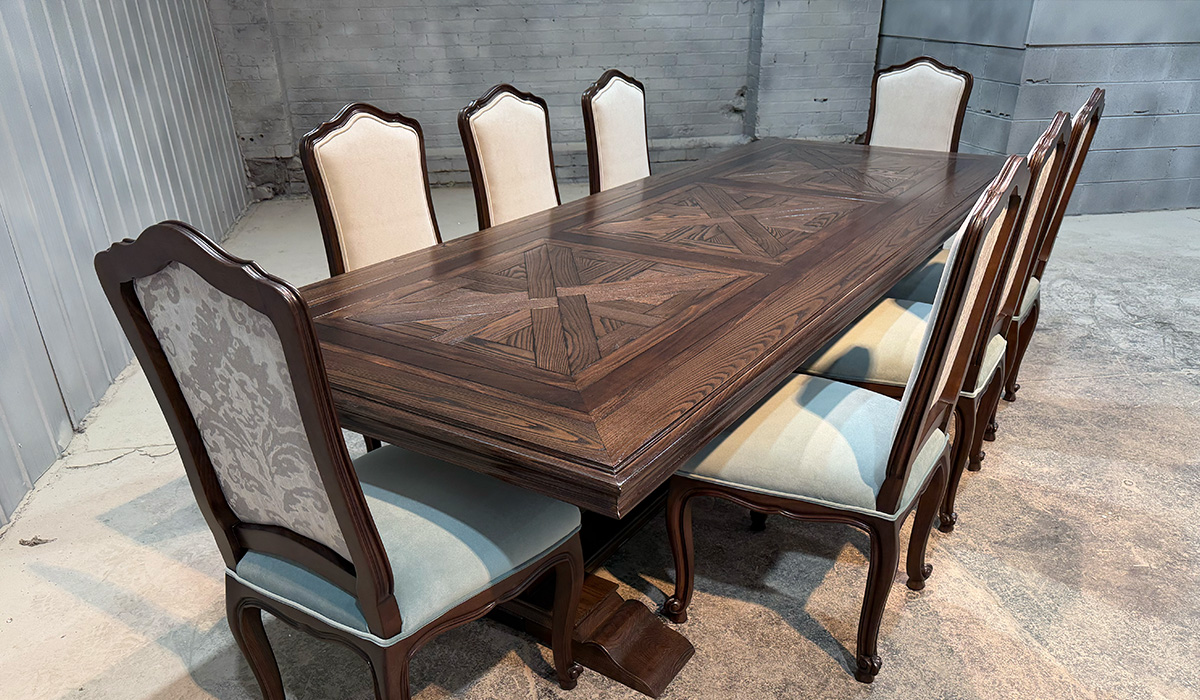
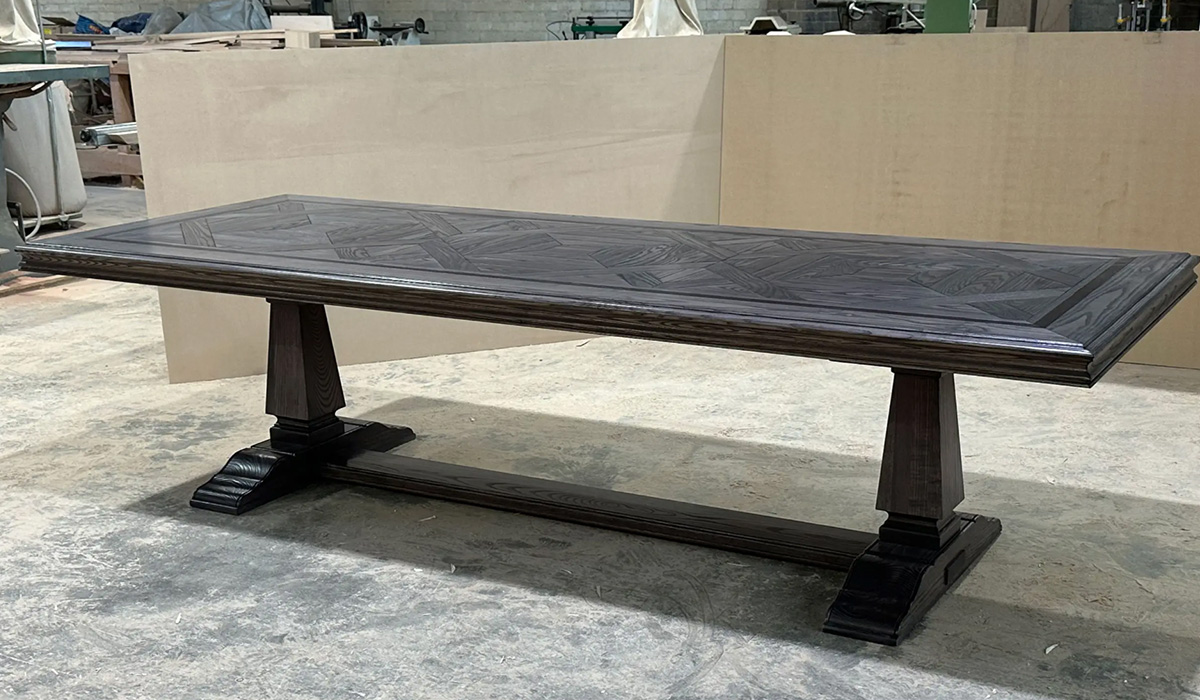
Tradition Meets Innovation: The Old-World Craft Behind Our Parquetry Dining Tables
A Parquetry dining table looks timeless at first glance. The pattern feels calm and settled, as if it has always been there. But creating that effect today depends on a careful mix of old skills and smart use of modern tools. Workshops that build handcrafted dining tables and Australian made dining tables have to respect tradition while still working in a practical, current way. At French Tables, that balance sits at the centre of every Parquetry dining table, from compact family pieces to huge dining tables and large dining tables made for regular entertaining.
Parquetry’s Roots in Old-World Grandeur
Parquetry began in grand European houses and palaces, where timber floors and furniture became part of the architecture. In those spaces, pattern wasn’t decoration for its own sake. It helped guide the eye through large rooms and create order. French furniture makers developed geometric designs that felt calm, even when they were quite complex.
Building those early parquetry floors and parquetry dining table tops demanded steady hands and clear thinking. Every small block of timber had to be cut, placed, and joined with care so the lines stayed straight and the pattern stayed true. That same respect for geometry and grain still guides handcrafted dining tables today. Workshops like French Tables carry those ideas across into Australian made dining tables, even though the homes they serve are very different from old European halls.
The Non-Negotiables of Old-World Craft
Some parts of making a parquetry dining table remain stubbornly hands-on. Each piece of timber still needs to be chosen by eye and touch. Makers look for grain that runs cleanly, boards that will sit well together, and colour that feels balanced across the whole surface. This is especially important for large dining tables and huge dining tables, where any mismatch becomes obvious very quickly.
Once the timber is selected, the pattern has to be laid out by hand. Even if machines cut the pieces, people still place them. They check each joint, line up points and edges, and stand back often to see how the surface reads as a whole. A parquetry dining table with a slightly uneven pattern can feel restless, even if the structure is sound. Hand layout helps avoid that.
Sanding and finishing are also physical, patient tasks. Makers move across the surface again and again, smoothing high spots and easing sharp edges. The aim is a top that’s smooth to the touch but still shows the life of the timber. If all these steps were handed completely to machines, a parquetry dining table might look flat and lifeless. Texture, depth, and a sense of human input would fade, especially on large custom made dining tables and solid oak dining tables that sit in the centre of a room.
Where Innovation Quietly Supports Craft
Even in a traditional workshop, modern tools have a clear role. They don’t replace craft, but they can support it in useful ways.
Better Tools, Same Craft Values
Today’s makers often use refined saws and cutting systems to shape the small pieces for a parquetry dining table. Accurate cutting saves timber and helps the pattern fit more cleanly. Moisture meters and controlled storage spaces help keep boards stable before they’re turned into handcrafted dining tables. This reduces movement later on, which matters a lot for huge dining tables and large dining tables that see daily family use.
Measurement tools also play a role. Makers can quickly check thickness, angles, and flatness as they work. That means Australian made dining tables are less likely to leave the workshop with hidden issues in the structure. The values behind the work stay old-fashioned: care, patience, and pride in the result. The tools simply help the craft stay consistent, especially on large custom made dining tables with complex patterns and longer spans.
Modern Finishes for Modern Life
Finishes have changed as homes have changed. Families now expect their parquetry dining table to cope with hot plates, spills, and regular use by children and guests. Updated finishing systems help protect the surface from daily wear while still letting the grain show through.
The maker and client can choose between finishes that feel more natural to the touch and those that add an extra layer of protection. Either way, the goal is the same: a surface that suits busy Australian households. Hand-applied finishes on solid oak dining tables and other Australian made dining tables keep the depth of colour and variation in the timber. At the same time, modern formulas give better resistance to marks than many older products.
Conclusion
Bringing tradition and innovation together in a parquetry dining table is a quiet, steady process. Old European ideas about pattern, proportion, and grain still guide the work. Modern tools and finishes help Australian made dining tables cope with real life in contemporary homes. Handcrafted dining tables, whether they’re compact pieces or huge dining tables and large dining tables for regular gatherings, benefit when workshops respect both sides of this equation.
Every item of furniture made by luxury interior designer and furniture manufacturer Mark Alexander is bespoke, made for your area, made for your space. Discover how we can bring your perfect parquetry dining table to life.