From Timber to Table: The Artisanal Steps Behind a Solid Oak Dining Table
A good dining table does more than fill a room. Australian made dining tables often become the spot where families meet, talk, and share daily life. Solid Oak dining tables are especially valued because they’re built to last and age with dignity, rather than drift in and out with trends.
Every one of these pieces begins as raw timber. It passes through a series of careful, practical steps before it reaches your home. In this article, we’ll walk through that journey from timber to table and show how it connects with the wider French Tables design process, from first sketch through to installation.
1. Selecting the Right Oak: Origin, Grade, and Character
Solid Oak dining tables are chosen for its strength, stability, and graceful grain. It holds weight well, resists everyday bumps, and develops a soft patina over time. For Australian made dining tables, this is what gives you a sense of quiet permanence. Makers look closely at the source of their timber. Responsible forestry, steady supply, and consistent quality all matter. Boards are graded for knots, grain pattern, and colour variation.
2. Seasoning and Preparing the Timber
Freshly sawn oak holds a lot of moisture. If it’s used too soon, you’ll likely see warping or cracks over time. That’s why air-drying and kiln-drying are so important for Solid Oak dining tables. The timber is brought down to a stable moisture content so it can handle Australia’s changing seasons without misbehaving.
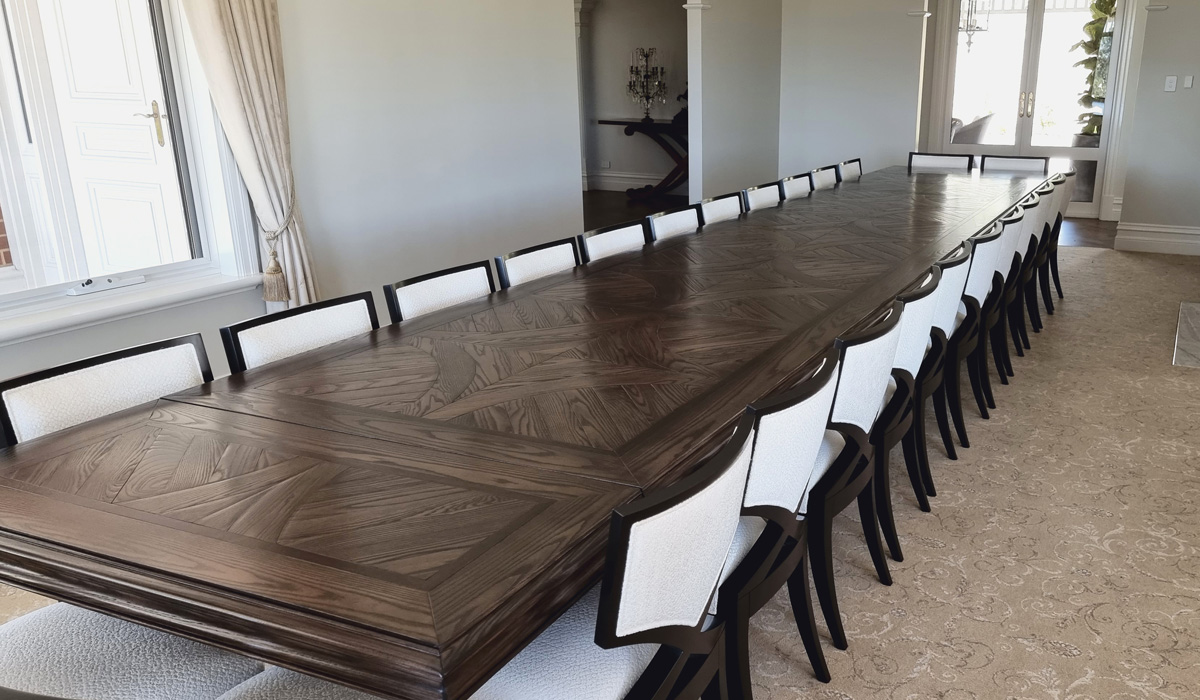
Once dry, the boards are cut, planed, and squared. The maker is already planning ahead: which pieces are best for the tabletop, which should become legs or aprons, and which might suit parquetry work. Good preparation at this point helps prevent movement later, even in huge dining tables that span many dining chairs.
3. From Board to Tabletop: Joinery, Layout, and Detail
The tabletop is where most people’s eyes go first. Boards are laid out so the grain runs in a calm, natural flow. Light and dark sections are balanced so the top feels cohesive, especially in large dining tables that dominate an open-plan space.
The maker constantly weighs visual interest against structural strength. Allowances are made for timber movement too, via expansion gaps, breadboard ends, or frame-and-panel construction.
4. Crafting the Base: Legs, Frame, and Proportion
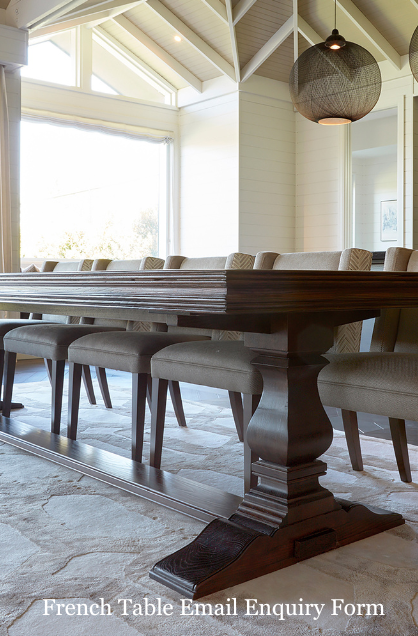
A dining table isn’t just a top on sticks. The base, legs, and frame are planned to match the tabletop in both strength and style. Leg shape, thickness, and detail all affect how Australian made dining tables sit in a space. Turned legs can feel more classic, while tapered or trestle bases often suit contemporary homes.
The frame or apron supports the top while still giving room for knees and dining chairs. Proportions are planned around everyday life: seat height, chair clearance, and room size. This is especially important with Huge dining tables, where poor planning can make the dining table feel cramped.
5. Sanding, Finishing, and Colour Development
Before any finish goes on, the surface is sanded through a series of finer grits. The goal is a smooth, tactile feel that still respects the natural texture of the oak. You should be able to run your hand along the edge of Solid Oak dining tables and feel smoothness and comfort, not roughness.
Stains, oils, or waxes are then chosen to suit both the timber and the home it’s going into. The best finishes protect against daily wear, spills, and sunlight while still letting the timber breathe. For large dining tables that sustain heavy use, this balance is critical.
6. Final Checks, Delivery, and In-Home Setup
Before leaving the workshop, every Solid Oak dining table is checked. Joints, stability, finish quality, and surface feel are all reviewed. Packing and transport are handled with care so Australian made dining tables arrive in the same condition they left the factory.
In your home, the dining table may be assembled on site, levelled, and positioned. Makers often share advice on cleaning, products to avoid, and how to manage heat and moisture.
Conclusion
From the first cut of carefully chosen oak to the last check of each joint, every step shapes how Australian made dining tables look and feel in daily life. Drying, cutting, and smart joinery help the timber stay steady over the years. Thoughtful details in the top, base, and finish keep Solid Oak dining tables comfortable and welcoming, whether they’re smaller pieces or huge dining tables made for big family meals.
Every item of furniture made by luxury interior designer and furniture manufacturer Mark Alexander is bespoke, made for your area, made for your space. Discover how we can bring your perfect solid oak dining table to life.